
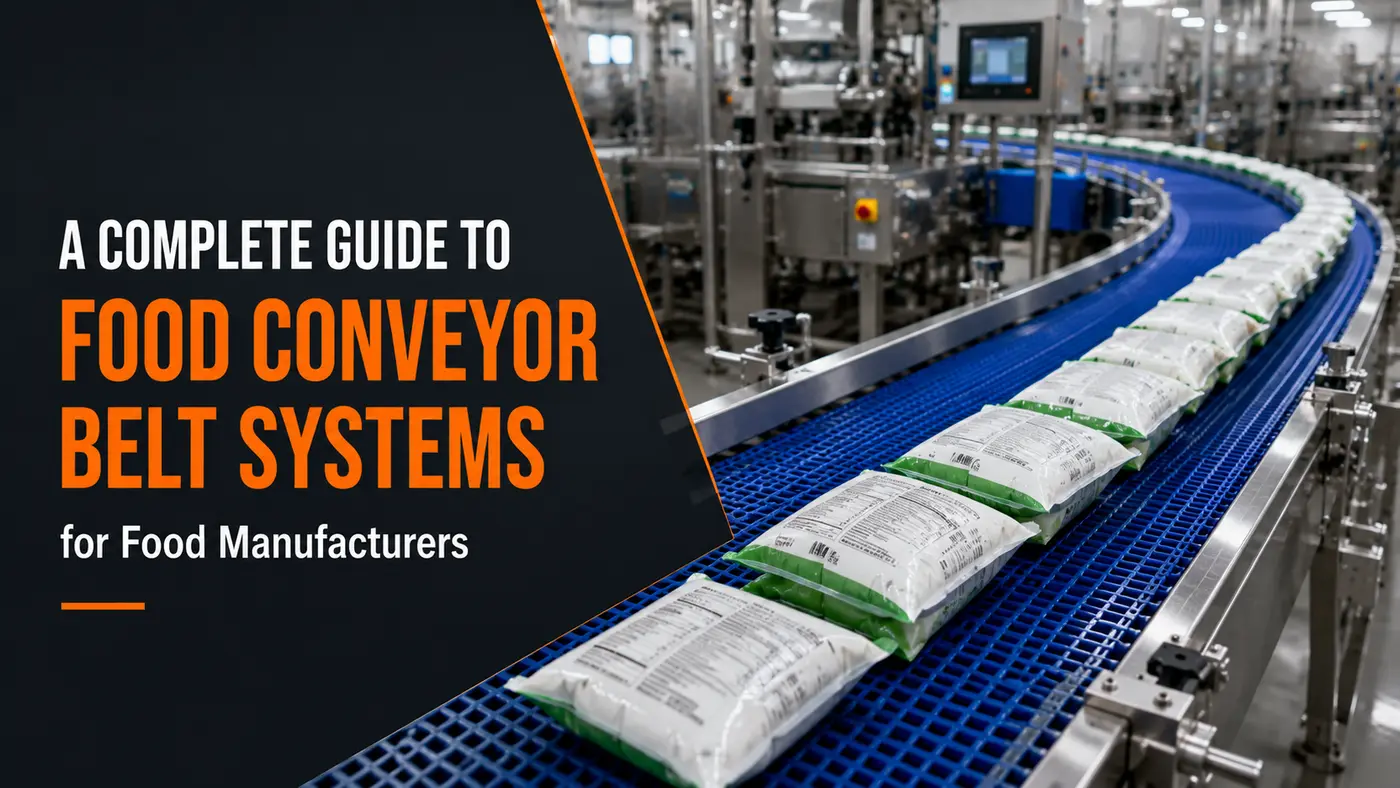
With all the demands and expectations placed on your food manufacturing facility, floor efficiency is as effective as the weakest link, the transitions. From delicate, freshly baked biscuits to sorting huge loads of raw potatoes, from processed snack cooling to rapid cooling, material handling is the key to your daily profits.
Use of generic material transport equipment in a food production line is a sure recipe for disaster. It brings heavy regulatory scrutiny, expensive recalls for bacterial contamination and unpredictable downtime to your structure.
A high-throughput, purpose-built food conveyor belt framework is a no-brainer in terms of operation for throughput and cleanroom protection.
Omtech Food Convey System is a world-class, proven, elite food conveyor belts manufacturer that specializes in designing and manufacturing food processing networks that meet the rigorous sanitary requirements. Omtech integrates FDA-approved materials with modular structural geometry to provide turnkey material handling arrays that optimize the food processing lines all over the world.
Technical Benchmarks of True Food-Safe Conveyance
With heavy industrial equipment, all material transport is judged by raw structural capacity and torque. But on a food-processing floor, the emphasis shifts entirely to microbiological safety, surface porosity and rapidity of sanitisation.
A track made of standard canvas or lower-quality rubber can absorb fluids, moisture from plants and animal fats. As time goes on, these liquids separate the material's internal fibres, creating the track itself as a breeding ground for harmful germs like Listeria and Salmonella.
Material Integrity Matters
To offset this, professional systems are designed using high-quality, specialist materials:
- Stainless Steel (SS304) Framing: Assures a completely smooth, anti-corrosive framing that resists corrosive chemical sanitizers and powerful, high-pressure wash-downs without pitting or rusting.
- FDA-Approved Thermoplastics: These solid modular surfaces feature excellent wear resistance, feature 0% fluid absorption and include high-density Polypropylene (PP), Polyethylene (PE) and Polyoxymethylene (POM).
- Tool-Free Mechanical Disassembly: Advanced open-frame designs allow for easy belt removal and rapid clean-ups, reducing sanitation changeover windows without the need for tools.
Maximizing Vertical Space: The Need for Sloped Elevation
One of the most expensive resources in a food manufacturing plant is floor space. Expanding your processing line 100% horizontally takes up huge amounts of cleanroom space that could be used effectively. A flat belt cannot be used for feeding multi-head packaging scales, or for elevating blanched goods into deep frying wells, etc., since products slide back.
This operational bottleneck is eliminated by implementing a heavy-duty food-grade incline conveyor.
These sloped transport arrays use mechanical accents, specifically engineered to successfully deal with gravity:
- Cleated Flights: Transverse raised ribs directly attached to belt modules to form pocket that will secure loose, wet, rounded food items as it moves up steep incline.
- Corrugated Side Walls: Belt edges with flexible vertical barriers that fully enclose free-flowing products such as loose grains, frozen berries or namkeen snacks and prevent them from falling into the structural frame.
- Positive Sprocket Drive Alignment: Unlike conventional friction-based continuous bands that track problems when oiled or moisture loaded, modular plastic links meshing directly with driving sprockets eliminates tracking concerns altogether.
Sector-Specific Conveyor Integration
Each food subclass has its own set of physical constraints—including high stickiness, structural fragility and extreme temperature—entailing a custom-made solution in terms of materials transport systems.
1. Bakery & Ice Cream Lines
If smooth and shock-absorbing transportation to prevent product breakage is necessary, then biscuits or delicate ice cream cones need to be taken fresh from the oven. Open-mesh, flush-grid patterns are used for cooling lines to get even ambient airflow around hot products to remove oil and moisture that may remain after production and before packaging.
2. Vegetable & Potato Processing
Some root vegetables or raw potato slices call for high-capacity durability combined with the processing capabilities of specialty functions. The Roller inspection tables roll gently as products proceed to facilitate full manual grading, while the vibrating dewatering lines efficiently remove the surface liquid in a continuous process, integrated within the table.
3. Liquid Pouch Accumulation
Unique pencil conveyor systems are used on packaging lines that seal free-flowing liquid pouches (such as oil and milk pouches), creating minimum friction and reducing material jamming with filled material safely stacked to avoid puncturing.
Operational Dividends of High-Performance Conveyance
Investing in plant improvements for a custom automated infrastructure designed by a proven food conveyor belt manufacturer will pay off in terms of plant performance:
- Minimized Product Yield Loss: Smooth side guards and strong mechanical flighting ensure that ingredients remain in place on the line and there are no spills on the floor or waste in the structure.
- Reduced Maintenance Expenses: When there is localized damage to a modular plastic belt, maintenance personnel can easily replace just one interlocking link in a matter of minutes, without needing to replace the entire roll of the belt.
- Flawless Regulatory Audits: Smooth, non-porous surfaces eliminate organic collection areas from under your nose and save time in your cleaning process while making your facility easy to pass strict global food safety inspections.
Frequently Asked Questions (FAQs)
1. What directly distinguishes a certified food conveyor belt from a standard industrial belt?
A food-safe belt is made entirely of materials that are safe and non-toxic to food, as certified by regulatory agencies such as FDA and USDA. These materials are designed in such a way that they can withstand hot and cold extremes (from freezing to deep frying) and constant chemical washdowns without releasing chemical byproducts into food products.
2. How does an open-frame stainless steel design assist with plant hygiene?
Typical enclosed box-frame conveyor designs allow food debris and wash-down liquid to hide in the inside of the conveyor and pose a potential risk of bacteria. Open frame stainless steel design enables cleaning crews to spray completely through the machine frame with no blind spots for the accumulation of organic material.
3. Can a food-grade inclined conveyor safely process highly sticky or hot materials?
Yes. For sticky or hot applications, systems can be customised to include high temperature Teflon-coated components, non-stick matte-finished plastics or integral clean-out scrapers which continually remove the residue from the belt surface as it is being conveyed.
Conclusion
The absolute need to achieve high production volumes with a perfect safety record demands an absolute shift from generalized material handling equipment. Your business requires hygienic, rugged and highly efficient lines of transport for growth and scaling up to meet the demands of transporting food safely and efficiently, and working with a dedicated industrial partner like Omtech Food Convey System will deliver this. A precision system like a high-quality food-grade incline conveyor can safeguard your product quality, save on manual processing work and create a very responsive, auditable processing area that is future-proof.